

In the realm of natural remedies, herbs have long been revered for their remarkable ability to promote wellness and alleviate a wide range of ailments. From soothing stomach aches to combating the common cold, these botanical treasures offer a wealth of healing properties. But how best to incorporate these potent herbs into our daily lives? Enter the culinary method; a time-honoured approach that seamlessly blends the art of cooking with the science of herbal medicine.
Today, we embark on a culinary adventure, exploring five of the most versatile and readily available herbs that are deeply ingrained in African cuisine. These culinary gems, easily accessible year-round, pack a powerful punch, treating a variety of common ailments, from colds and tummy aches to constipation and blood detoxification. Our top five magical herbs for everyday wellness are:

- Garlic: a pungent member of the Allium family, is a culinary staple in many cultures around the world. Renowned for its antibacterial, antiviral, and anti-fungal properties, garlic has been traditionally used to combat infections, boost immunity, and lower blood pressure. It also acts as a natural decongestant and expectorant, providing relief from coughs and colds.
- Ginger: a flowering plant with a long, knobby root, is a culinary and medicinal powerhouse. Known for its anti-inflammatory, antioxidant, and digestive properties, ginger is commonly used to alleviate nausea, reduce muscle soreness, and ease menstrual cramps. It also helps to boost the immune system and combat respiratory infections.
- Turmeric: a bright yellow spice derived from the root of the Curcuma longa plant, is a culinary and medicinal treasure. Celebrated for its anti-inflammatory, antioxidant, and anticancer properties, turmeric is traditionally used to improve joint health, boost brain function, and protect against chronic diseases. It also helps to enhance digestion and promote wound healing.
- Black Pepper: the dried and ground berries of Piper nigrum, is a common kitchen staple and a medicinal marvel. Renowned for its antibacterial, anti-inflammatory, and antioxidant properties, black pepper is traditionally used to improve digestion, boost circulation, and relieve respiratory congestion. It also helps to enhance the absorption of other nutrients, such as turmeric.
- Parsley: a vibrant green herb with a delicate aroma, is a culinary and medicinal treasure. Rich in vitamins and antioxidants, parsley is traditionally used to freshen breath, improve digestion, and boost kidney function. It also helps to reduce inflammation and protect against chronic diseases.
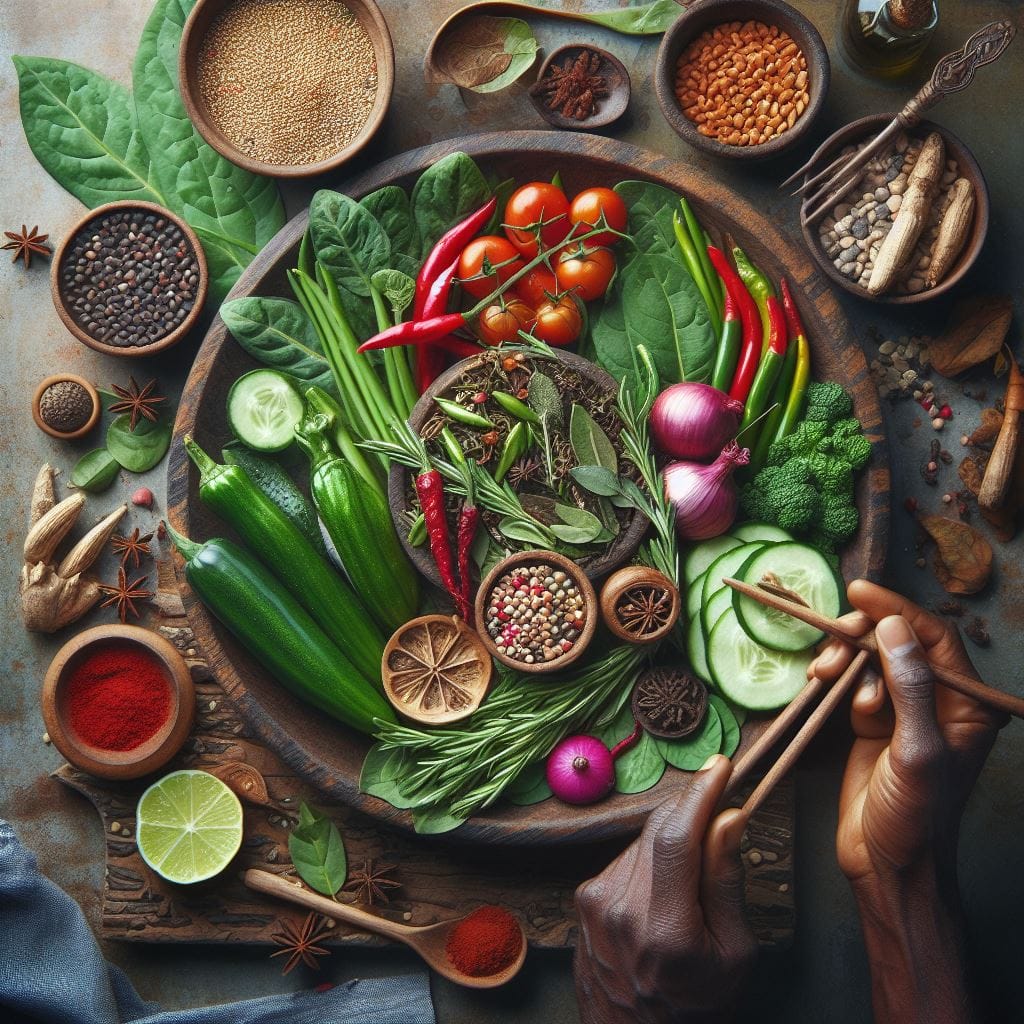
African Culinary Adventures with Medicinal Herbs
As passionate cooks and advocate for food as medicine, we’ve explored various African recipes that incorporate these medicinal herbs. Despite using common ingredients, the same herbs and spices are repeatedly employed in various combinations, resulting in a diverse range of flavors. Here are some popular African dishes that showcase the flavors and health benefits of these culinary gems:
Beef Curry with Garlic, Ginger, and Turmeric
This hearty and flavorful curry is a true delight in most African homes, eateries and events. The combination of garlic, ginger, and turmeric not only adds depth of flavor but also provides anti-inflammatory and antioxidant benefits.
Grilled Chicken Marinated with Black Pepper and Parsley
This simple yet flavorful recipe highlights the versatility of black pepper and parsley. Black pepper enhances the chicken’s natural flavor, while parsley adds a fresh, herbaceous note. So delicious, you’ll want to lick the plate clean!
Jollof Rice with Garlic, Ginger, and Turmeric
Jollof rice, a staple in West African cuisine, is a one-pot meal packed with flavor and nutrients. The combination of garlic, ginger, and turmeric adds warmth and complexity to the dish while providing health benefits. Embrace the challenge of this recipe and be rewarded with a dish that will tantalize your taste buds and leave you wanting more.
Spicy Fried Fish with Garlic, Ginger, and Turmeric
This flavorful and aromatic stew is a perfect example of how African cuisine utilizes herbs and spices to create bold and healthy dishes. The combination of garlic, ginger, and turmeric imparts a warm, spicy kick while providing anti-inflammatory and antioxidant benefits.

Veg & Egg Omelette with Black Pepper and Parsley
This comforting and nutritious stew is a great way to incorporate these medicinal herbs into a lighter meal. The combination of black pepper and parsley adds depth of flavor while providing antioxidant benefits.
Fun Facts
- Garlic was once considered a sacred plant in ancient Egypt.
- Ginger was used as a currency in ancient China.
- Turmeric has been used in India for over 5,000 years.
- Black pepper was once so valuable that it was used as a form of payment in medieval Europe.
- Parsley was considered a symbol of mourning in ancient Greece.

Tips
Store dried herbs in a cool, dark, and dry place: This will help to preserve their flavor and aroma.
Keep dried herbs in airtight containers: This will prevent them from absorbing moisture and losing their flavor.
Add dried herbs at the beginning of cooking: This will give them time to release their flavor into the dish.
Use dried herbs in marinades and rubs: This can help to infuse your dishes with flavor.
Warnings
Some herbs and spices can interact with medications. It is important to talk to your doctor before using any new herbs or spices, especially if you are taking any prescription medications. Pregnant or breastfeeding women should talk to their doctor before using certain herbs and spices.
- Garlic: Excessive consumption of garlic may cause digestive discomfort in some individuals.
- Ginger: High doses of ginger may cause heartburn in certain individuals.
- Turmeric: Turmeric may interact with certain medications, including blood thinners. Consult your healthcare provider before consuming high doses of turmeric.
- Black pepper: Black pepper may irritate the lining of the digestive tract in sensitive individuals.
- Parsley: Excessive consumption of parsley may lead to kidney stones in individuals with a history of kidney stones.
Disclaimer
The information provided in this blog post is for educational purposes only and should not be construed as medical advice. Always consult with your healthcare provider before incorporating herbs into your diet, especially if you have any underlying health conditions or are taking medications.

References
- Borrelli, F., et al. “Antibacterial activity of allicin, the main sulfur compound from garlic.” Journal of Antimicrobial Chemotherapy 53.1 (2004): 187-192.
- Enciso-Moreno, A., et al. “Garlic and its derived components as anti-inflammatory agents.” Plant Foods Hum Nutr 68.4 (2013): 327-336.
- Chiang, C. H., et al. “Effect of ginger on inflammatory mediators in rat chondrocytes stimulated with interleukin-1β.” Phytomedicine 12.9 (2005): 684-690.
- Nikam, D., et al. “Antioxidant and anti-inflammatory properties of ginger and its potential role in cancer prevention.” Journal of the American College of Nutrition 27.5 (2008): 1129S-1136S.
- Aggarwal, B. B., et al. “Curcumin: The spice that kills cancer cells.” Cancer Cell 9.3 (2005): 159-169.
- Hewlings, S. J., & Dennison, A. E. “A review of the anti-inflammatory and anti-arthritic properties of curcumin.” Phytomedicine 14.1 (2007): 266-274.
- Srinivasan, K. “Black pepper and its pungent principle—piperine: A review of their biological activities.” Phytomedicine 10.4 (2003): 489-497.
- Vinod, P. R., et al. “Effect of black pepper (Piper nigrum Linn.) and turmeric (Curcuma longa Linn.) on bioavailability of curcumin.” Indian Journal of Experimental Biology 41.9 (2003): 1124-1127.
- Velioglu, Y. S., et al. “Antioxidant and antimicrobial properties of Turkish herbal plants.” Journal of the Science of Food and Agriculture 83.14 (2003): 1277-1282.
- Afifi, F. M., et al. “Antimicrobial activity of parsley (Petroselinum crispum L.) extracts against selected foodborne pathogens.” Journal of food protection 65.10 (2002): 1643-1647.